RAG vs fine-tuning: which one your product needs
RAG vs fine-tuning for product teams: what each one changes, when each fits, what each costs to maintain, and why most products should start with RAG.
By Ali HassanSenior engineer for SaaS and AI products
If you are weighing RAG vs fine-tuning for a product feature, the short answer is that RAG changes what the model can see when it answers, and fine-tuning changes how the model behaves. RAG looks up the right text at answer time and hands it to the model as context; fine-tuning trains the model ahead of time so it answers in a particular format, tone or task. Most products need the first, not the second.
What RAG vs fine-tuning actually changes
RAG, short for retrieval-augmented generation, leaves the model as it is and feeds it the facts it needs for each question. You keep your content in a search index, retrieve the passages that match the question, and put them in the prompt. The model's knowledge of your domain lives in that index, not in its weights, so you change what it knows by changing what you index.
Fine-tuning does the opposite. You collect example inputs and the outputs you want, then train the model on them until the pattern sticks. The facts are not the point; the behaviour is. A fine-tuned model is better at producing a shape of answer, not at knowing something new about your business.
That distinction settles most cases. If the model does not know your facts, that is a retrieval problem. If it knows them but answers in the wrong shape, that is closer to a fine-tuning problem. Mixing the two up is the common and expensive mistake.
When RAG fits
Reach for RAG when:
- The facts change. Prices, policies, documentation, tickets, stock. Anything you would otherwise have to retrain to keep current belongs in an index you can update in minutes.
- The data is per customer. Each tenant, account or user has their own content, and one must never see another's. You scope retrieval to the right owner instead of training a separate model per customer.
- Answers need citations. When a user has to trust the answer, the model should point at the source. Retrieval gives you that: you know which passages went into the prompt, so you can show them.
- Data must stay isolated. Regulated or sensitive content can sit in a store with the access controls you already run, rather than being baked into shared weights.
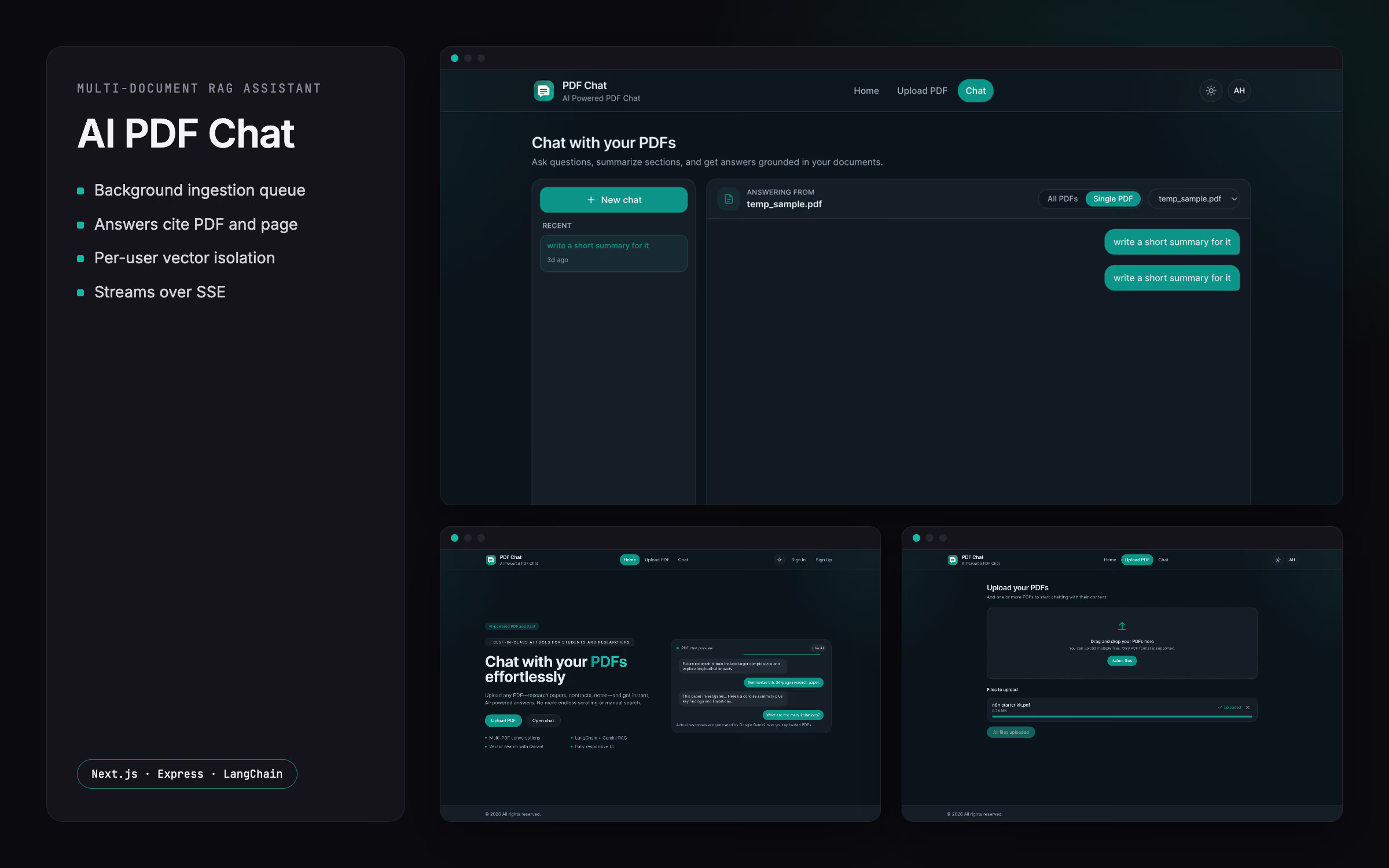
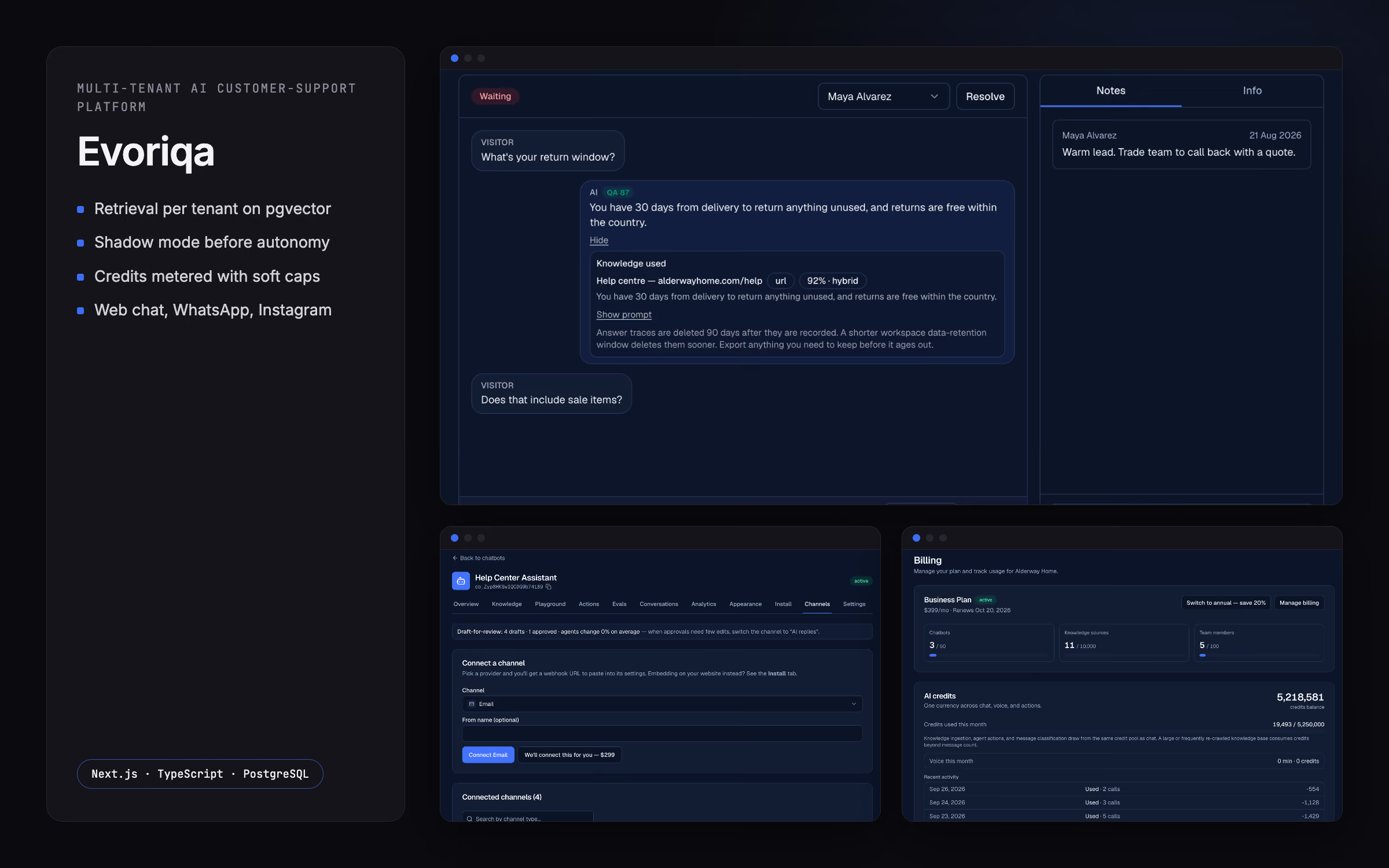
Two of my own projects lean on exactly this. In AI PDF Chat, a multi-document RAG assistant, every answer cites the PDF and page it came from, so a reader can check it against the source. Evoriqa, my own AI support platform, gives each tenant an agent that may only answer from that tenant's own knowledge, which is a retrieval rule rather than a training one.
When fine-tuning fits
Fine-tuning earns its keep in a narrower set of cases:
- A consistent format or tone. You need every answer in the same structure, voice or house style, and prompting gets you most of the way but not reliably enough.
- A narrow, repeated task. Classifying, extracting or rewriting the same kind of input, over and over, where the job barely changes.
- Shorter prompts at high volume. If you are pasting the same long instructions into every call, training that behaviour in can shrink the prompt. At high request volume, the saving on tokens can pay for the training.
Notice what is not on that list: teaching the model new facts. You can fine-tune facts in, but they go stale the moment they change, and you cannot cite them. That is retrieval's job.
The cost and effort of each
The running costs differ more than the headline prices suggest.
RAG's effort goes into the pipeline: chunking your content, embedding it, storing it, and keeping retrieval relevant. When the facts change, you re-index the affected content and you are current. There is no training step in the loop. The ongoing work is quality, making sure the right passages come back for the right questions.
Fine-tuning's effort goes into the data. You need a clean set of example inputs and ideal outputs, enough of them, and consistent. That dataset is the hard part, and it is where most of the time goes. When the behaviour needs to change, or the base model you trained on is replaced, you prepare data and train again. Facts that change mean retraining, which is slow and easy to put off until the model is quietly out of date.
Retrieval also has to survive its own maintenance. On Evoriqa, switching embedding providers does not scramble search results while the knowledge base is being re-indexed, which matters because a live product cannot go blind for the hours a re-index can take. That kind of operational care is where RAG effort actually lands.
A quick comparison
| Question | RAG | Fine-tuning |
|---|---|---|
| What does it change? | What the model can see at answer time | How the model behaves |
| Facts that change often? | Re-index, minutes | Retrain, slow |
| Per-customer or isolated data? | Natural fit | Hard and risky |
| Can it cite sources? | Yes | No |
| Consistent format or tone? | Possible with prompts | Its strength |
| Main effort | Retrieval pipeline and quality | Preparing training data |
| Shorter prompts at scale? | No | Yes |
Why most products start with RAG and good prompts
Before either option, most of the gap between a weak answer and a good one is the prompt. Clear instructions, a few examples in the prompt, and the right retrieved context will carry a product a long way. RAG plus a well-written prompt covers the majority of what teams reach for fine-tuning to do, and it does so without a training step, without a dataset to maintain, and with citations you can show.
So I start there almost every time. Get retrieval working, get the prompt right, and measure how often the answers are actually correct. Only when that plateaus, and the thing still missing is behaviour rather than knowledge, does fine-tuning come into the conversation.
Using both together
They are not rivals. The strongest setups use each for what it is good at: fine-tune the model so it answers in your format and tone reliably, and use RAG to feed it current, cited, per-customer facts at answer time. The fine-tuned behaviour stays stable, the retrieved knowledge stays fresh. You reach for this once you have a real reason to fine-tune, not before, because you are then maintaining both a dataset and an index.
A short decision checklist
Run down this list before you choose:
- Does the answer depend on facts that change? If yes, RAG.
- Does it need to cite a source? If yes, RAG.
- Is the data different per customer, or sensitive? If yes, RAG.
- Have you already tried a better prompt with retrieved context? If no, do that first.
- Is the remaining problem the shape of the answer, not its facts? If yes, fine-tuning is worth costing.
- Are you making the same high-volume call with a long fixed prompt? If yes, fine-tuning may pay for itself.
- Do you have, or can you build, a clean dataset of ideal outputs? If no, fine-tuning is not ready.
If most of your ticks are in the first group, you want RAG, and you are in good company.
When to bring in help
If you are deciding this for a product with real users, the risk is not picking the wrong one in the abstract. It is spending weeks on a fine-tuning dataset that a day of retrieval work would have beaten, or shipping a RAG feature that retrieves the wrong passages and quietly gives bad answers. I help teams make that call and build the retrieval side properly, which is most of what my RAG development work covers. If you want to see what good retrieval looks like in practice, AI PDF Chat and Evoriqa are two of mine.