What is a fractional CTO? Role, cost and when to hire one
What a fractional CTO does, how one differs from a full-time CTO, an agency or a freelancer, what it costs, and when an AI startup should hire one.
By Ali HassanSenior engineer for SaaS and AI products
A fractional CTO is a senior technical leader who works for your company part-time, usually on a monthly retainer, while doing the same for a handful of other companies. You get the judgement of someone who has built and run production systems, without the salary, equity and permanence of a full-time hire. It suits startups that need real technical decisions made now but are not ready, or not large enough, to bring a chief technology officer in-house.
What a fractional CTO actually does
The title covers a wide range, so it helps to be concrete. On most of my engagements I am the only senior engineer in the room, and the work tends to fall into a few areas.
- Technical strategy and roadmap. Architecture direction, build or buy, and the stack and vendor choices that are expensive to reverse once a product is live.
- Hiring and vetting engineers. Defining the role, sitting in on interviews, judging whether someone can actually do the work, onboarding them, and leading the team.
- Investor questions and technical due diligence. Answering the technical parts of a raise, and standing up to a diligence process without surprises.
- Delivery process. Releases, code review, CI/CD and the security basics, so shipping is boring rather than tense.
- Architecture decisions. Retrieval, models, data, tenancy and cost: the calls that need a senior head.
- Hands-on build work where it is agreed, alongside your team and in your repository, not only advice from the sidelines.
Before any of that becomes code, I prefer to write the plan down first: model choice, retrieval design, how output gets checked, and a cost and speed budget. A page of plan is cheaper than a month of the wrong build.
How much of each you get depends on the level. The leadership work (strategy, hiring, due diligence, process) is the CTO end; the hands-on build work and architecture calls are the senior-engineer end. Most engagements mix both, and the split is worth agreeing in writing at the start.
Fractional CTO vs a full-time CTO, an agency and a freelancer
These four options solve overlapping problems, and the right one depends on what you actually lack: a decision-maker, a builder, or both.
| Option | What you get | Cost shape | Best when |
|---|---|---|---|
| Fractional CTO | Senior technical leadership and decisions part-time, with hands-on work where agreed | Monthly retainer, scaled to days per week | You need the calls made now but cannot justify a full-time hire |
| Full-time CTO | A dedicated leader who owns technology end to end and builds the team | Salary plus equity, the largest fixed cost of the four | You have the scale, funding and roadmap to keep one fully occupied |
| Agency | A team that delivers a defined build | Project fee or monthly retainer | You have a scoped project and your own person to own the result afterwards |
| Freelance developer | A pair of hands to build what you specify | Hourly or daily | You already know what to build and who decides the architecture |
The short version: a freelancer builds what you tell them to, an agency delivers a scoped project, a full-time CTO owns everything, and a fractional CTO makes the senior decisions and does the work that needs them, a few days a week.
Fractional CTO cost
Rates vary widely, and the honest answer is that they turn on two things: how many days a week you need, and how senior the person is. A founder who wants a monthly review and a few calls pays far less than one who needs someone in the standups most days. I will not print a market rate here, because any single figure would mislead more than it helps.
My own fractional retainer runs $4k–$8k a month, with the days per week agreed per engagement. That is a published range, not a quote: the price goes in writing before work starts, and it holds unless the scope changes. When you compare quotes, compare the days per week behind each one, not just the headline number, because that is where the real difference sits.
When you need a fractional CTO for a startup
A fractional CTO for a startup earns its place in a few specific situations:
- You have no senior engineer to make architecture calls. Decisions are being deferred, or made by whoever is loudest, and some of them will be costly to undo.
- You are adding AI to a product with real users. Model choice, retrieval and cost per request all need a senior head, and a wrong call here shows up on the bill and in wrong answers.
- You are preparing to raise or face technical due diligence. Investors will ask about the stack, the team and the risks, and the answers need to hold up.
- You want technical leadership before you can justify a full-time CTO. You need the role filled now, not at the next funding round.
When you don't need one
Be honest about the cases where a fractional CTO is the wrong spend:
- You already have a senior engineer who owns the architecture and is trusted to make the calls.
- You know exactly what to build and simply need it built. A freelancer or an agency is cheaper for that.
- The real question is about product or go-to-market, not technology. A fractional CTO will not fix that.
Sometimes the cleanest advice is "don't hire for this yet," and a good one will say so.
How to choose a fractional CTO
Most of choosing well is asking plain questions and watching for a few warning signs.
Questions worth asking:
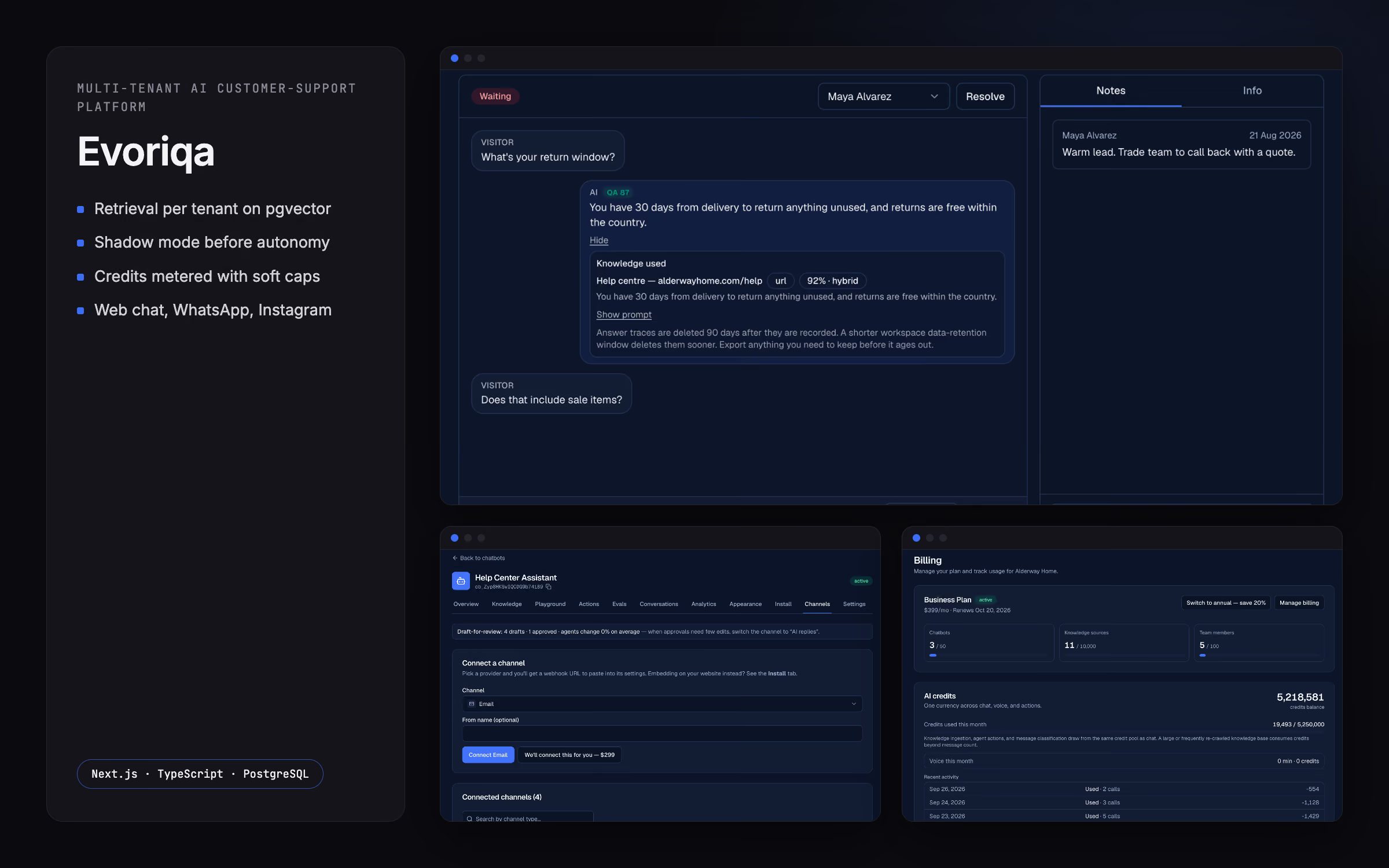
- Have you run something in production, and do you still pay its bills? Someone who operates their own system makes different decisions from someone who only advises. I co-founded and built Evoriqa, a multi-tenant AI support platform that is live in production, so the cost and failure modes I talk about are ones I pay for.
- Will you work in our repository, our chat and our standups? Leadership at arm's length rarely sticks. The work should live where your team already works.
- What gets written down before code starts? A plan and an agreed scope protect both sides.
- How does the engagement end, and what do we keep? You should keep your accounts, your infrastructure, your code and a documented handover.
Red flags:
- Lock-in. Anything that leaves you dependent on one person after they go. The code, the schema and the deployment setup should belong to you, and the handover should be documented so your own team can carry on. I treat this as a baseline, not a favour.
- A rewrite as the first answer. Stabilising what exists and replacing only what cannot be fixed is usually cheaper and safer than stopping to rebuild.
- Reluctance to put scope in writing, or a rate that moves depending on how the conversation goes.
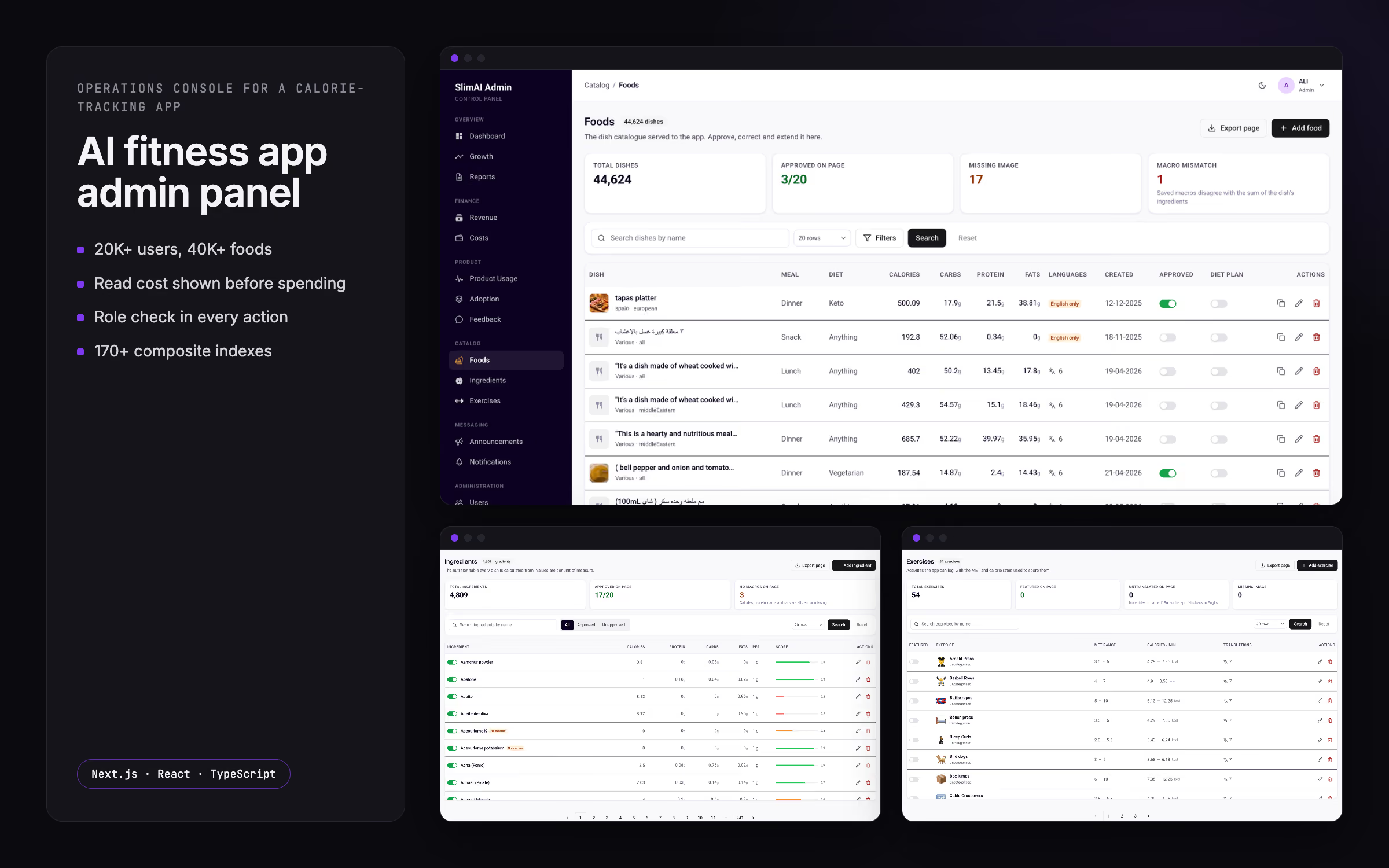
Proof of this kind of work is long-running engineering on live products, such as the operations console for a calorie-tracking app with more than 20,000 users. Steady work on something real tells you more than a slide deck.
What is different for AI startups
If you are building on top of models, a few decisions matter more than the rest, and they are exactly the ones a fractional CTO should own with you:
- Model choice, kept behind an interface so you can change vendor later without a rewrite. The model you start with is rarely the one you keep.
- Retrieval design: how the system finds the right context to answer from, and keeps one customer's data out of another's answers.
- How output gets checked. Decide where code verifies what the model claims, and where the model is trusted. The riskiest pattern is a confident wrong answer that no code ever checks.
- A cost and speed budget per request, set early and measured, not discovered on the invoice. If you want to sanity-check the numbers yourself, the LLM cost calculator is a quick start.
This is the same ground I cover when building an AI product from scratch, just applied to the product you already have. Getting these four right early is far cheaper than retrofitting them once you have real traffic.
When to bring in help
If you are making architecture calls you are not sure about, adding AI to a product with real users, or heading into a raise without a technical answer, that is the point to bring in a senior head part-time rather than guess. If any of that sounds like where you are, here is how I work as a fractional CTO. No pressure either way: sometimes the right answer is to wait, and I will tell you if it is.